This article was last updated on 27/07/2026.
You’ve found a wedding sign design you love. Now comes the question nobody warned you about: what size should it actually be?
If the size is off, a welcome sign gets lost against a venue wall, or a table menu ends up too small to read from across the place setting. Getting the size right isn’t complicated, but it does require knowing a few standard dimensions before you order or download anything.
(Not sure about paper sizes in general? View our essential paper size guide for Australia.)
This guide covers the most common wedding sign sizes used in Australia and what each one works best for.
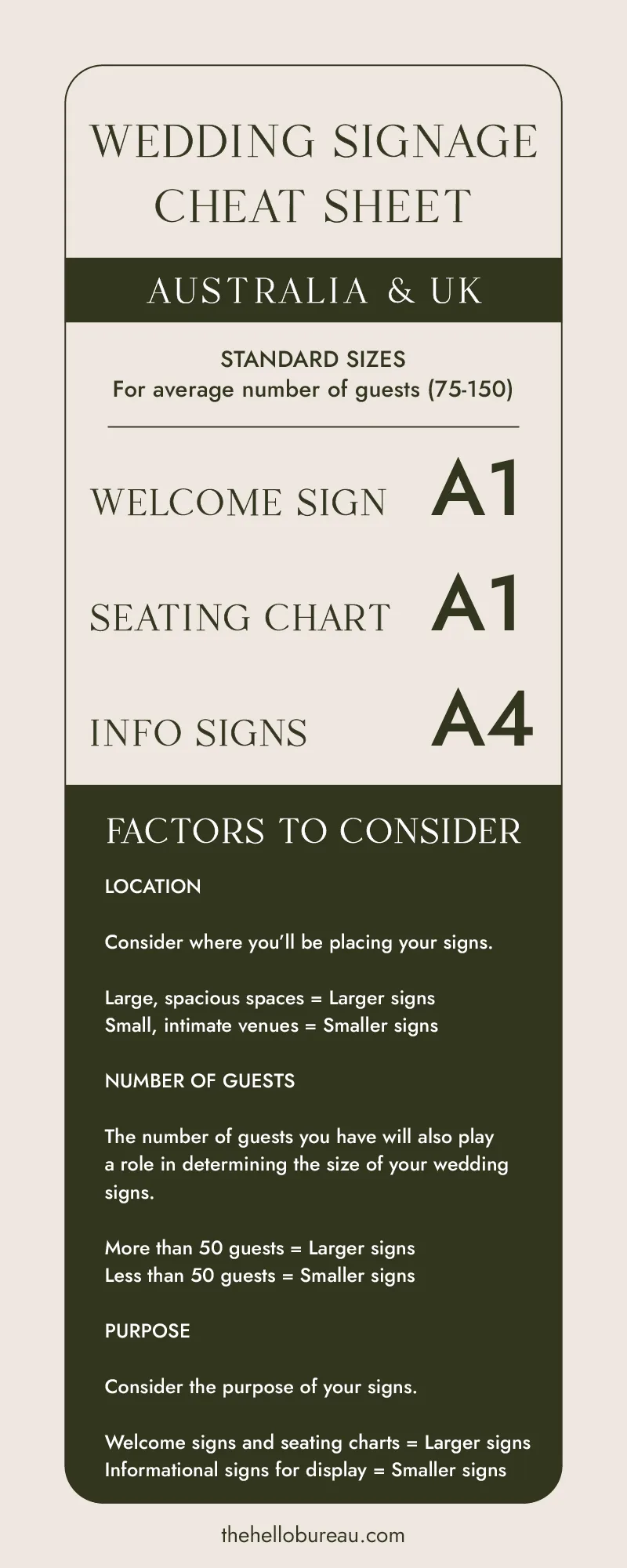
For most Australian weddings, wedding signs follow the ISO A paper standard. Here are the most common sizes, based on an average guest count of 75 to 150 people.
Standard Wedding Welcome Sign Sizes
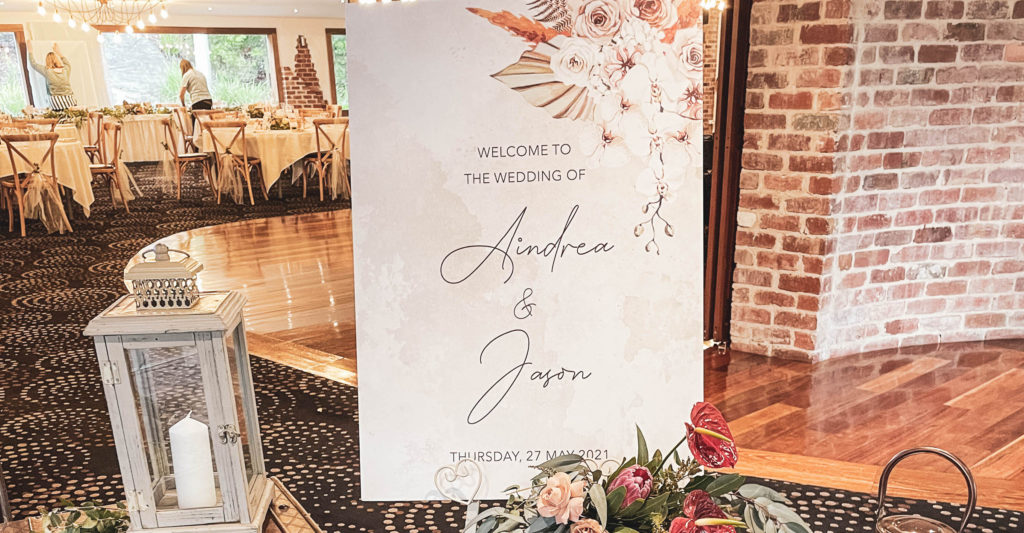
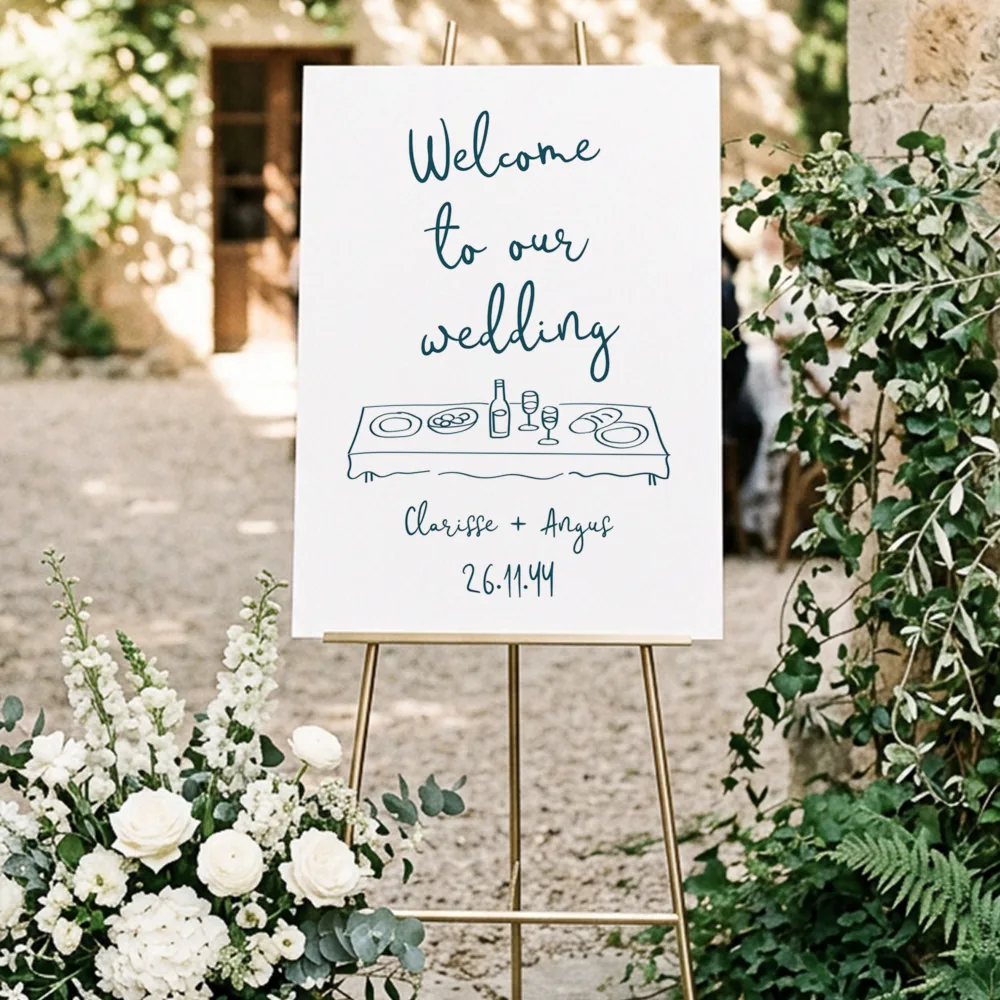
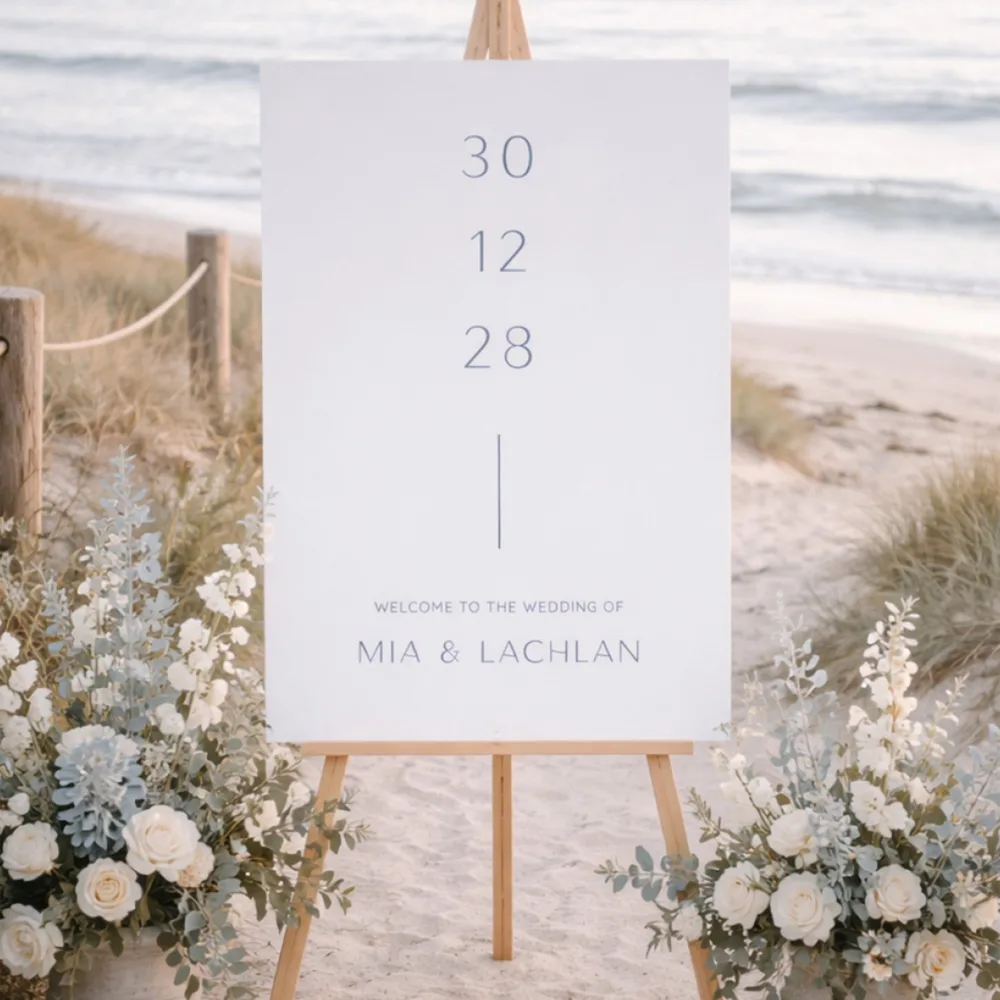
A1 (594 x 841mm) is the most popular choice. It’s large enough to catch attention as guests arrive without overwhelming your decor, and it suits the majority of indoor venues.
A2 (420 x 594mm) is exactly half the size of A1 and a good option for smaller spaces or more intimate venues.
For outdoor weddings or larger open spaces, A0 (841 x 1189mm) is worth considering. The extra size ensures the sign holds its own against an expansive backdrop.
Looking for print-ready A1 and A2 welcome sign templates? Here are some of our most loved designs — all editable and sized for Australian print shops.
Standard Wedding Seating Chart Sizes
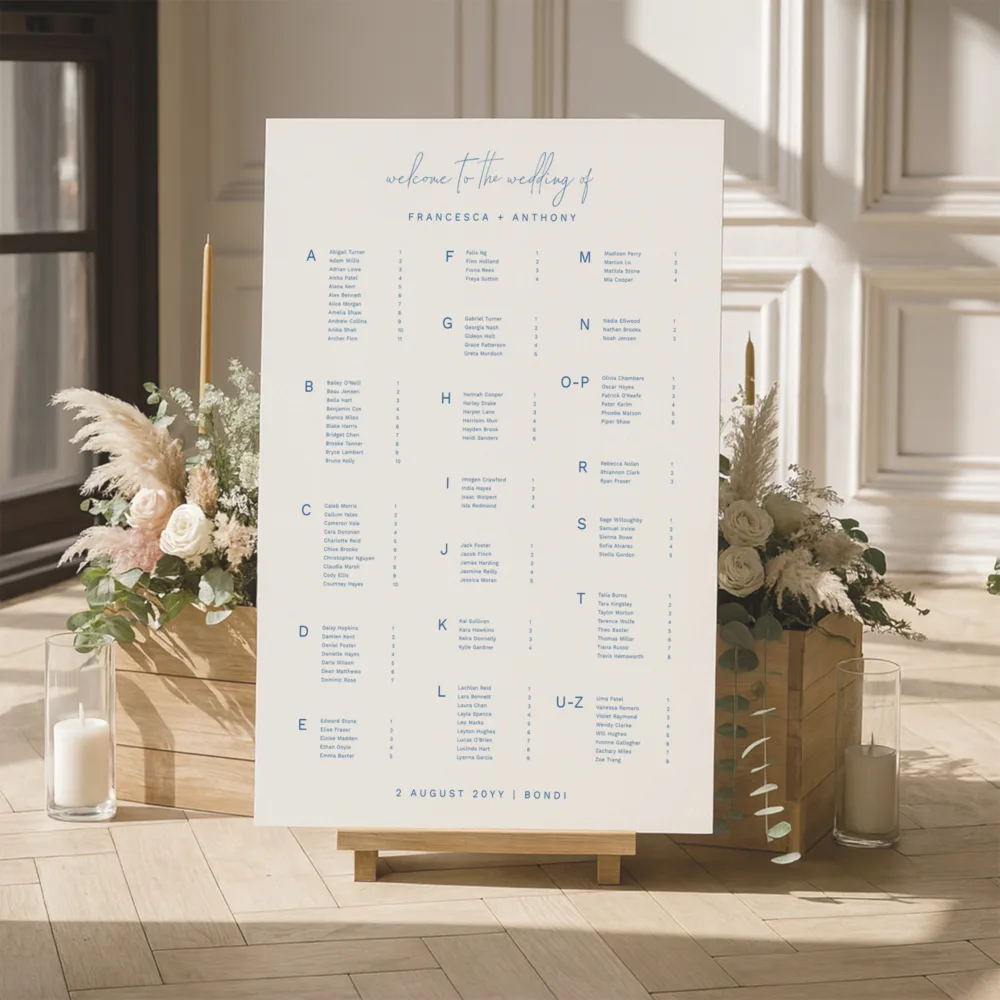
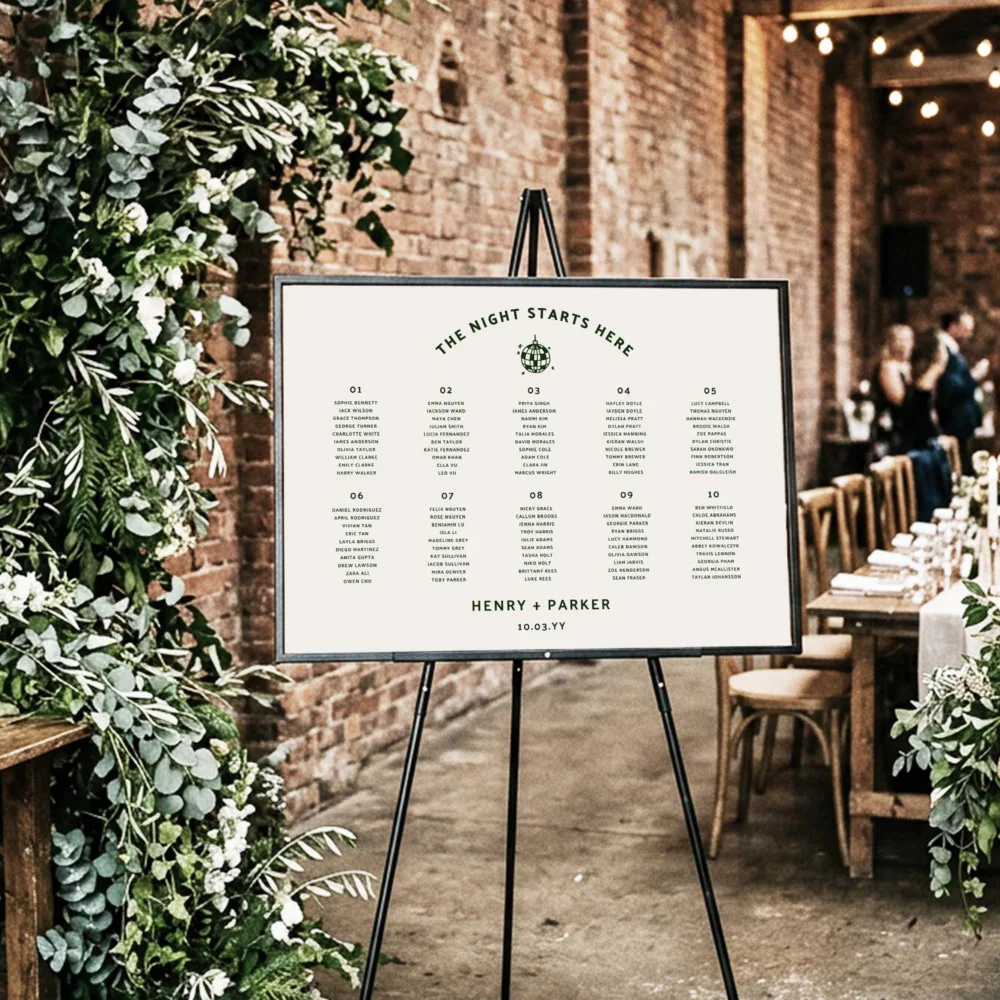
A1 is the standard starting point for seating charts, the same as a welcome sign. The real deciding factor though is legibility. Your guests need to be able to find their name without squinting or crowding the sign.
The right size comes down to how many tables you have and how many guests are attending.
- Up to 6 tables: A2 (420 x 594mm) works well and won’t look oversized in a smaller space.
- 7 tables or more: Step up to A1 (594 x 841mm) to keep names legible without crowding.
- 12 or more tables, or multiple long tables: Switch to landscape orientation so the layout has room to breathe.
- 150+ guests: A0 (841 x 1189mm) is worth considering to keep everything readable at a glance.
- Over 20 tables: Consider breaking up the tables and getting two seating charts printed.
(Need advice on how to organise your seating chart? Check out our post: Alphabetical vs Table-Based Seating Charts: Which One Should You Choose?)
If you’re creating your own seating chart, our A1 and A2 seating chart templates are ready to be personalised and printed.
Standard Menu Sign Sizes
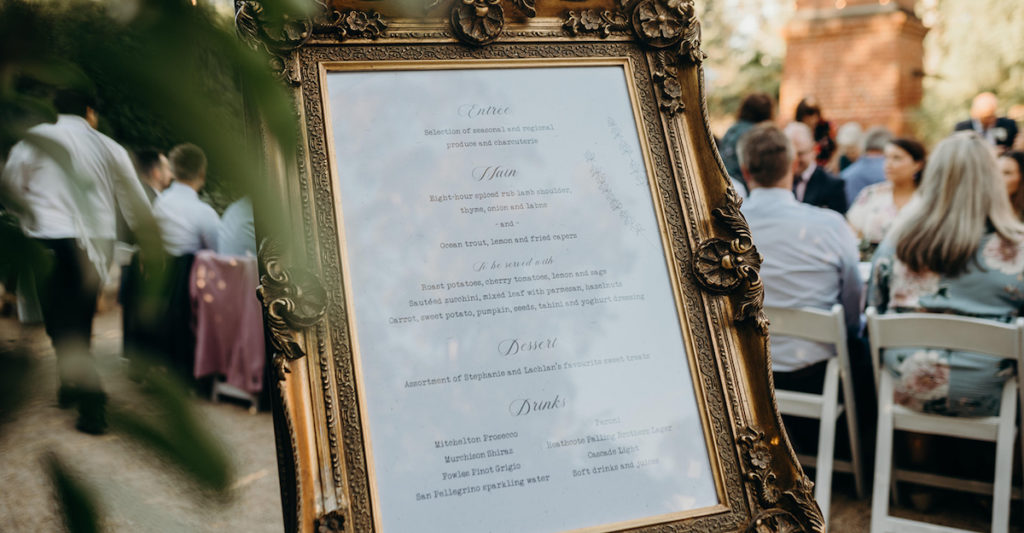
Menu sign size depends on how you plan to display them.
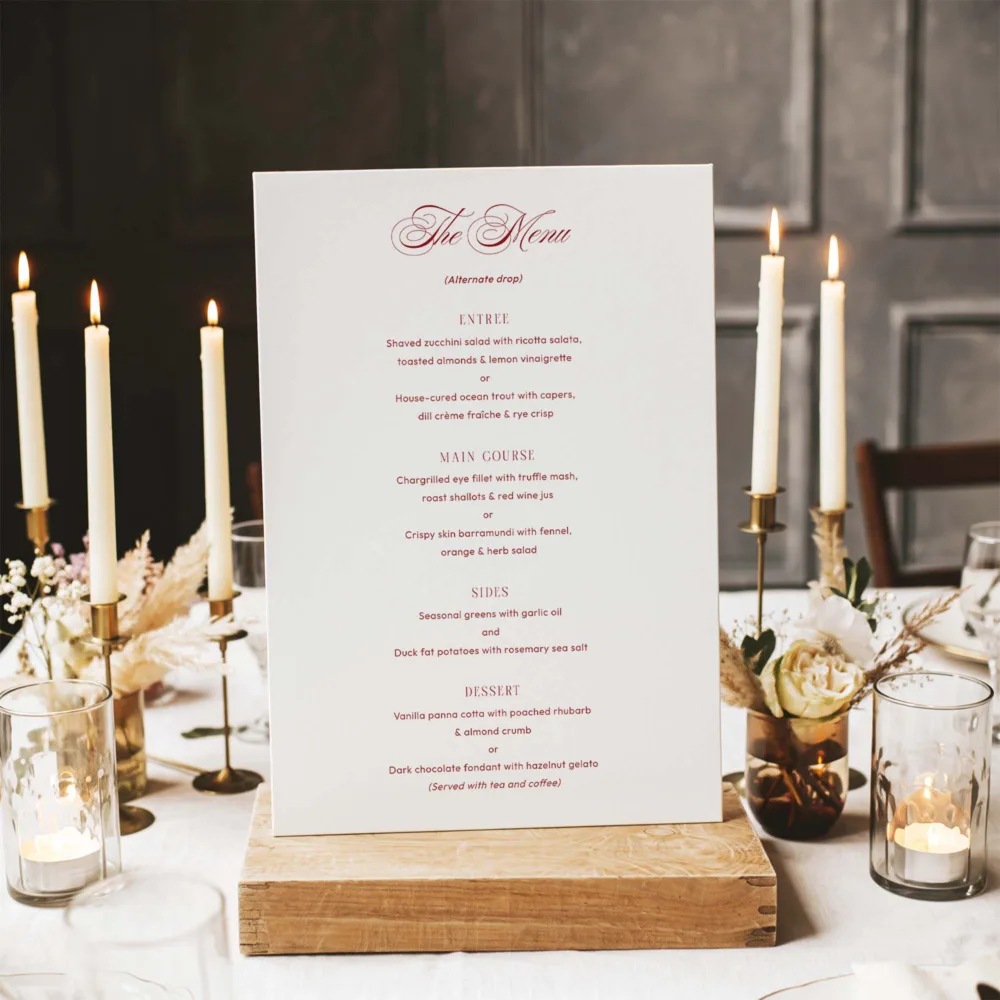
For a large format menu displayed at the entrance or bar area, A2 or A1 works well. It needs to be readable from a distance, so bigger is better here.
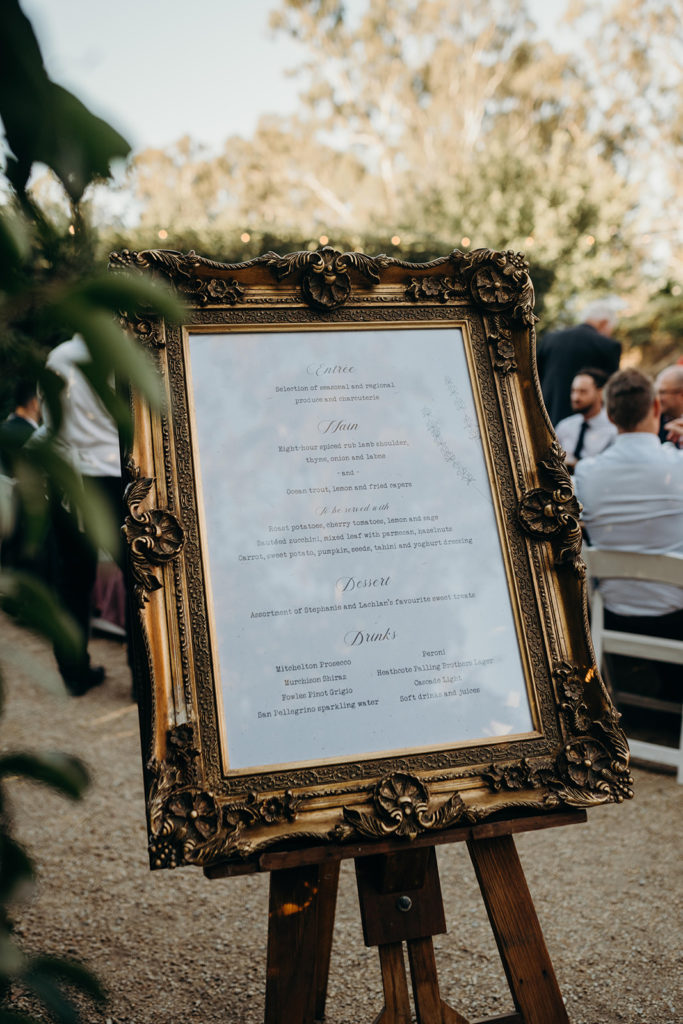
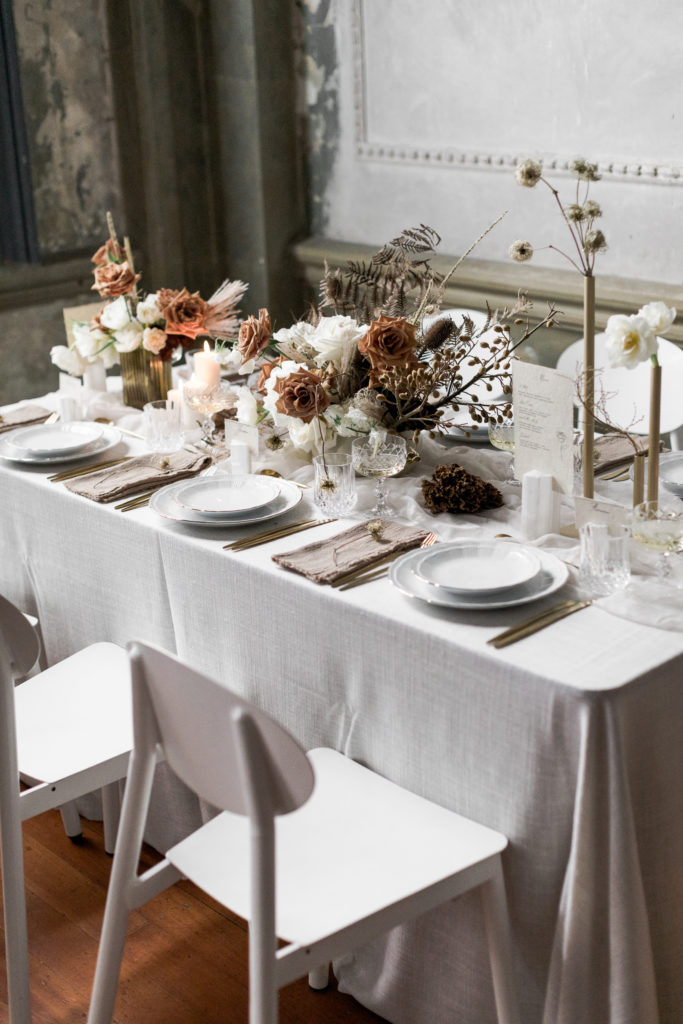
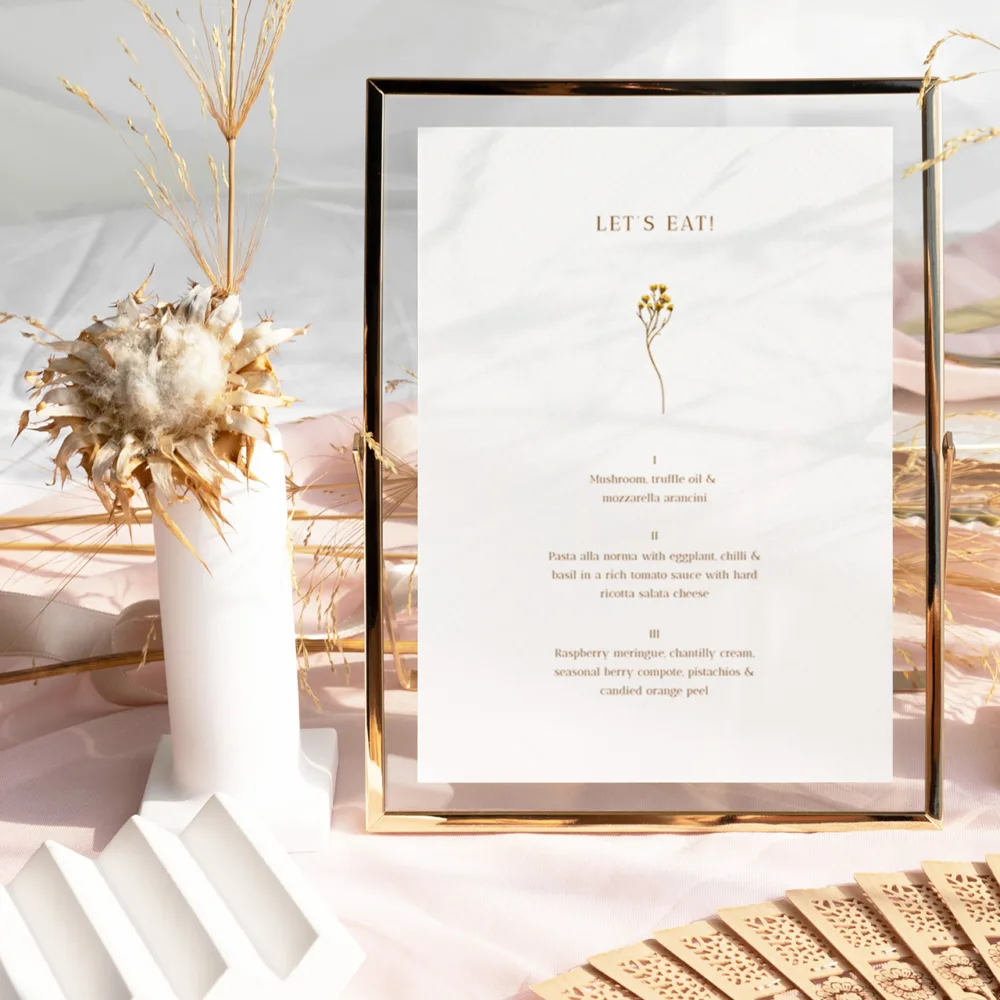
For individual table menus, A5 (148 x 210mm) or DL (99 x 210mm) are the most common choices. They sit neatly on a place setting without taking over the table.
Standard Bar Sign Sizes
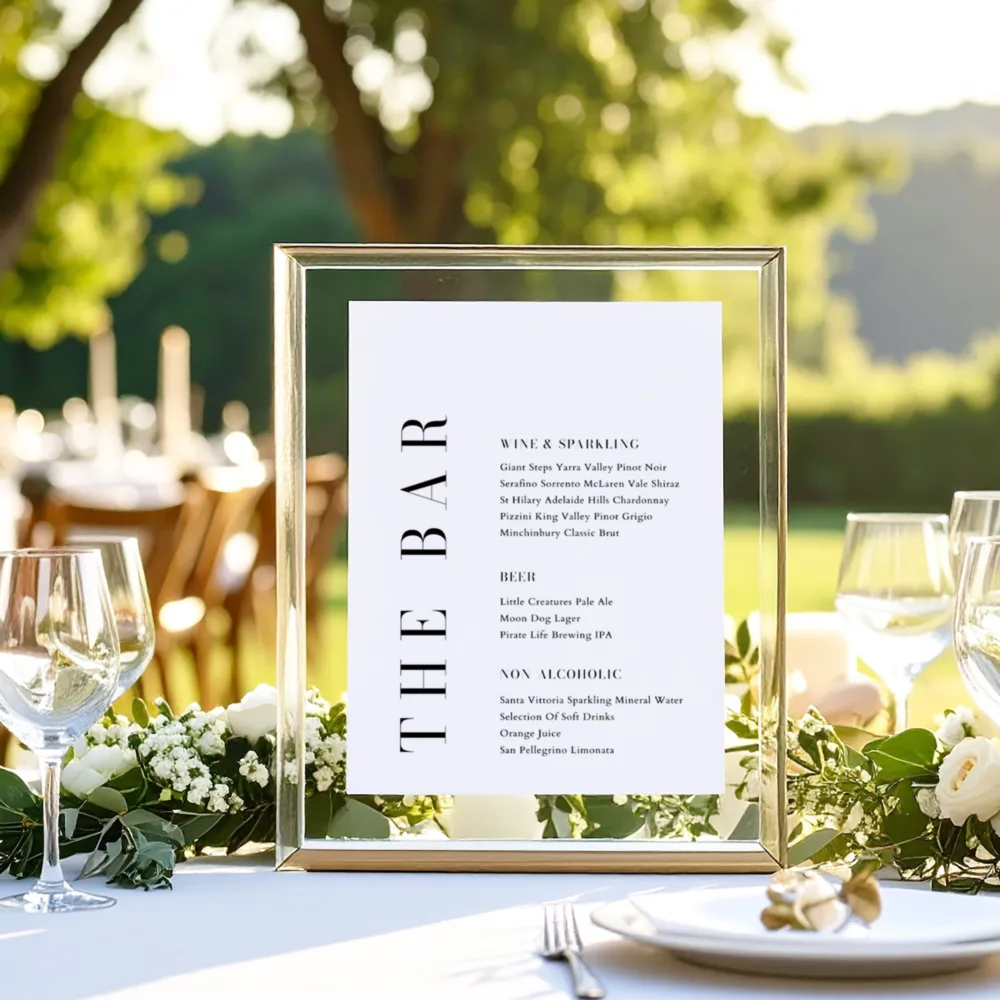
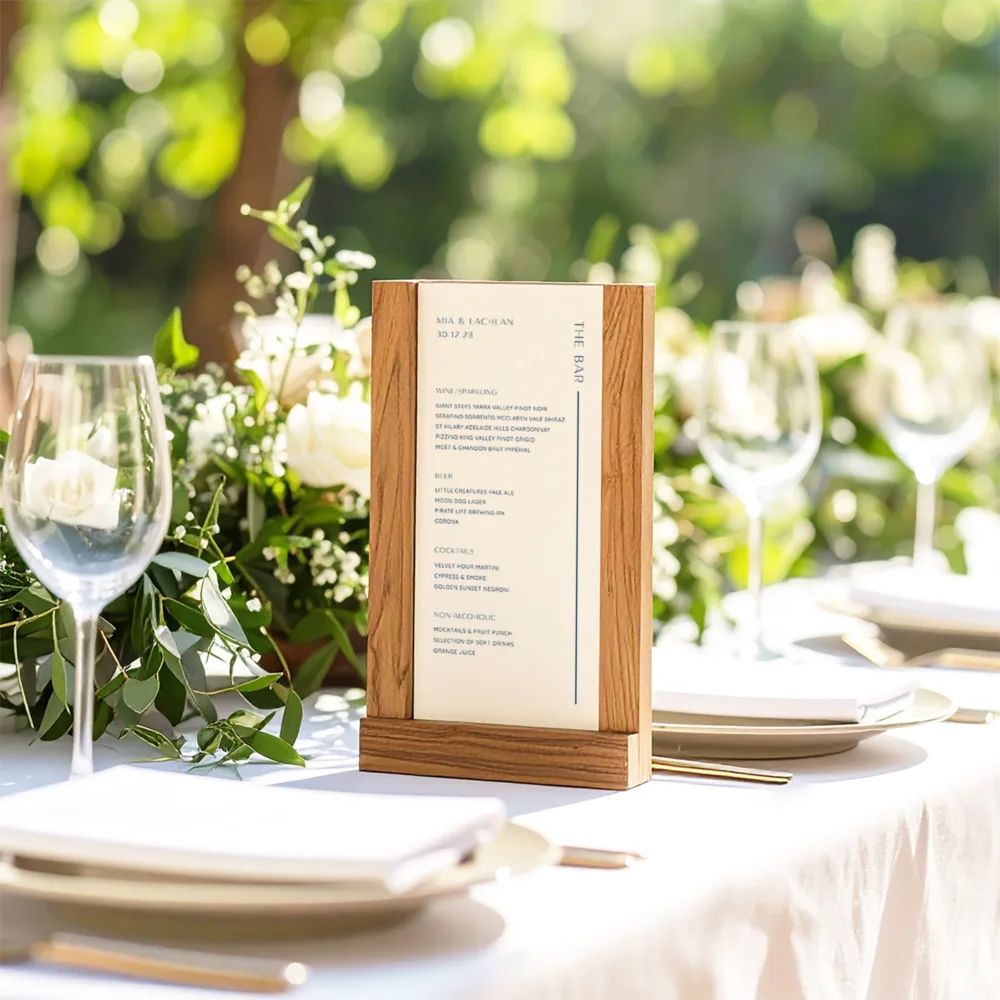
Bar signs are generally on the smaller side. A5 (148 x 210mm) or DL (99 x 210mm) are the standard choices and sit neatly on the bar without getting in the way of drinks service.
If you have a longer drinks list or want something with more presence, A4 (210 x 297mm) gives you a bit more room. For a decorative bar sign where the design is doing as much work as the text, A3 (297 x 420mm) works well. Generally there’s no need to go bigger than A3 unless you want it to be a real statement piece.
Browse our editable menu and bar sign templates in A3, A4, A5, and DL, all ready for you to personalise and print.
Standard Information Sign Sizes
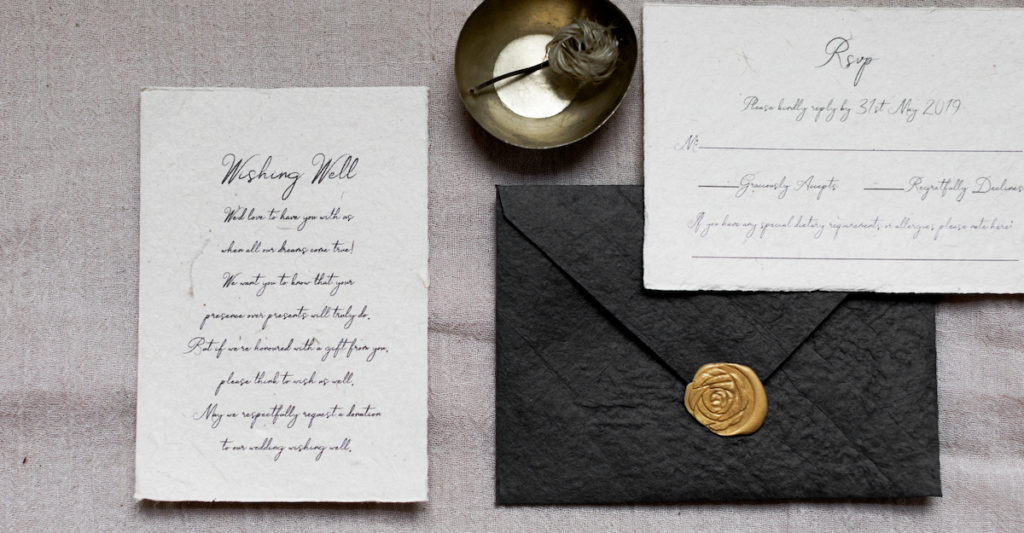
Information signs (think wishing well, guestbook, reserved seats) are supporting pieces, so they don’t need to be large. A5 to A4 is the standard range, enough to be noticed without competing with the surrounding decor.
When in doubt, consider where the sign will sit. A small table or gift table suits A5, while a sign that needs to be spotted from a few steps away is better at A4.
Why Wedding Signage Size Matters
The size of your wedding signage matters for several reasons. It affects three things: visibility, function, and cost.
First, it affects the visibility of your signs. If your signs are too small, they may be difficult to read, and your guests may miss out on important information. On the other hand, if your signs are too big, they may overpower your wedding decor and become a distraction.
Second, the size of your wedding signs affects their functionality. For example, if your seating chart is too small, your guests may have difficulty finding their table. Similarly, if your menu sign is too small, your guests may have trouble reading it, which could result in confusion.
Lastly, the size of your wedding signs affects your budget. Larger signs require more materials, which means they may cost more. However, choosing the right size for your wedding signs can help you save money without sacrificing on quality.

Factors to Consider When Choosing the Right Dimensions for Your Wedding Signage
Several factors come into play when choosing the right dimensions for your wedding signage. These include the location of your signs, the number of guests you have, and the purpose of your signs. Here are some key factors to consider:
Location
Consider where you’ll be placing your signs. If they’ll be placed in a large open space, such as a garden or a beach, you’ll need larger signs that can be seen from a distance. On the other hand, if your signs will be placed in a more intimate setting, such as a small indoor venue, smaller signs will work just fine.
Number of Guests
The number of guests you have will also play a role in determining the size of your wedding signs. If you’re expecting a large crowd, you’ll need larger signs that can be seen from a distance. However, if you’re having a more intimate wedding, smaller signs will suffice.
Purpose
Consider the purpose of your signs. Are they meant to guide your guests to their seats, or are they meant to display your menu? Signs that are meant to guide your guests, such as seating charts and directional signs, need to be larger and more visible. On the other hand, signs that display information, such as menus and programs, can be smaller.
Tips for Designing Wedding Signs That Work at Any Size
- Keep text minimal. The larger the sign, the more tempting it is to fill the space. Try to resist it. Stick to the essentials and let the design breathe.
- Choose readable fonts. A beautiful script font can become illegible at distance. If the sign needs to be read quickly (seating charts, welcome signs), make sure your font holds up at size.
- Use contrasting colours. Light text on a light background disappears, especially in outdoor or dimly lit venues.
- Personalise where it counts. Your names, wedding date, or a short phrase can elevate a simple sign without adding clutter.
Final Thoughts
Wedding signs do a quiet but important job on the day. The right size means they blend into your decor and do their job without anyone having to think twice.
Use this guide as your reference point when you’re ordering signs or downloading templates and you’ll be in good shape.